COMMON DRONE MAINTENANCE MISTAKES THAT LEAD TO COSTLY REPAIRS (AND HOW TO AVOID THEM)
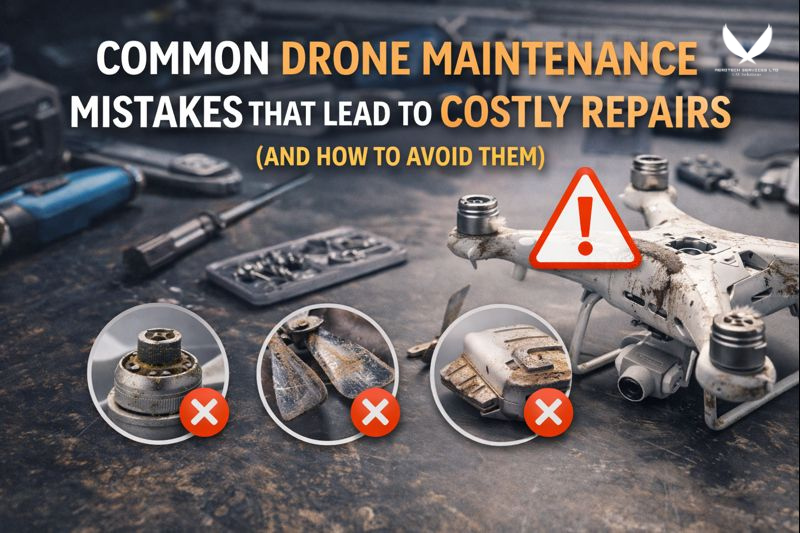
Avoiding drone maintenance mistakes on enterprise and professional drones, such as those from DJI, Autel, and Flyability, represents significant investments for industries like oil & gas, inspection, and surveillance. Poor maintenance practices are a leading cause of premature failures, crashes, and expensive repairs—often costing hundreds to thousands of dollars per incident.
Before the highlights, let us look at the three key words and meaning like DRONE, MAINTENANCE, GOAL of MAINTENANCE, and its types.
WHAT IS A DRONE?
A drone is an unmanned aerial vehicle (UAV) that flies remotely or autonomously. Which means it uses propellers, GPS, & sensors, no pilot on board, and it is controlled via app(s), remote(s) & AI
WHAT IS MAINTENANCE?
MAINTENANCE is an action to keep something in a good and perfect working condition. This act includes cleaning, checking, repairing, and replacing parts.
GOAL of MAINTENANCE
The GOAL of MAINTENANCE is to prevent breakdowns, ensure safety, and extend the lifespan of an object or machine.
WHAT ARE THE TYPES OF MAINTENANCE?
There are three main types of maintenance, which include:
- Preventive maintenance
- Scheduled: hourly, daily, weekly, monthly, and
- Routine checks to avoid
- Corrective maintenance
- Reactive: urgent response to
- Fix problems after they happen (e.g., replacing faulty parts).
- Predictive maintenance
- Using data to predict
- Replacing a part nearing its cycle
Common Drone Maintenance Mistakes, Consequences, and How to Avoid Them
Common mistakes include using the wrong tools, skipping calibration, improper battery handling, ignoring or neglecting propeller inspections, neglecting dirt build-up, poor storage, skipping and ignoring firmware updates, flying in unfavourable weather conditions, skipping pre-flight checks, and DIY (do it yourself) without expertise or training. These errors can lead to motor burnout, structural failure, or complete drone loss. By adopting proactive routines—pre/post-flight checks, manufacturer guidelines, and maintenance logging—operators can extend drone lifespan, reduce downtime, and avoid costly repairs.
- Using the wrong tools
- Mistakes: using the wrong tool for repairs on
- Consequences: this can lead to stripped screws and damaged It can lead to aerodynamic imbalance.
Damaging parts which can lead to costly replacement.
- How to avoid: use the specific or right tools as specified by the
- Skipping calibration
- Mistakes: inaccurate GPS, crashes
- Consequences: it can lead to aircraft being airworthy, or it can further slow down operations.
- How to avoid: calibrate the compass and IMU (inertial measurement unit) before a long flight.
- Improper battery handling
- Mistakes: Overcharging/discharging, storing fully charged or depleted, exposure to heat/cold, or ignoring swelling.
- Consequences: Reduced capacity, sudden power loss mid-flight, or fires/explosions. Replacement batteries: $100-500 each.
- How to avoid: Store at 40-65% charge in a cool, dry Cycle every 3 months. Charge in fireproof bags; discard swollen units
- Ignoring or neglecting propeller inspections
- Mistake: Flying with cracked, chipped, bent, or unbalanced props; failing to inspect before each flight.
- Consequences: Vibration leading to motor strain, ESC failure, or mid-flight imbalance, causing Repair costs: New props ($20-100) plus potential motor/arm replacement ($200+).
- How to avoid: Visually inspect and manually spin props pre-flight. Replace immediately if Use matched sets and balance them.
- Neglecting dirt build-up
- Mistakes: Using harsh chemicals or compressed air incorrectly; ignoring motors/sensors.
- Consequences: Overheating and clogged motors, obstructed sensors leading to avoidance failures, or corrosion.
- How to avoid: clean propellers. And sensors after every Use protective cases; store in climate-controlled spaces. Log and address minor issues promptly.
- Poor storage
- Mistakes: Storing in hot/cold areas, humidity, or loose without
cases; flying with minor cracks.
- Consequences: Frame/arm fatigue leading to breaks; warranty voids from unreported damage.
- How to avoid: Use protective cases; store in climate-controlled environments. Store in a padded and dry place. Log and address minor issues promptly.
- Skipping and ignoring firmware updates
- Mistakes: not paying attention to. Delaying or interrupting
Updates.
- Consequences: Bugs causing erratic flight, sensor errors, or incompatibility with new features. Bugs and performance issues. Potential crashes or bricked drones.
- How to avoid: update the drone regularly on official app(s).
- Flying in unfavourable weather conditions
- Mistakes: ignoring the weather conditions before and during
- Consequences: water and sand damage on the reducing drone
performance. High chance of crash occurrence.
- How to avoid: avoid rain, high wind, and salt
- Skipping pre-flight checks
- Mistakes: making mistakes, not paying attention to details
- Consequences: Drone
High chance of crash, which may lead to drone replacement at a cost of $50,000 – $150,000 using DJI and Autel Dragon Fish Pro as a case study.
- How to avoid: follow a checklist as designed, directed and laid down by the Manufacturer(s).
- DIY (do it yourself) without expertise or training
- Mistakes: handling a drone, Making modification that are not recognised, supported, and approved by the manufacturer.
- Consequences: worsen Void warranty, lack of trust, unhealthy
relationship between the operators and manufacturers, unprofessionalism in maintenance of the drone, repair of the drone and replacement of drone parts.
- How to avoid: train personnel involved in the servicing of Companies should encourage teamwork. Consult manuals and the manufacturer before major repairs on the drone.
Best Practices to Prevent Costly Repairs
- Implement a maintenance log for flights, inspections, and
- Follow manufacturer manuals (e.g., DJI/Autel guidelines).
- Perform and adhere thoroughly to pre-flight, in-flight, and post-flight checklists.
- Seek certified repairs for complex issues to preserve
Conclusion and Recommendations
Avoiding these common mistakes through disciplined maintenance can save thousands in repairs and downtime while enhancing safety. For enterprise users in demanding sectors, proactive care ensures reliable performance.
Operators should:
- Train on manufacturer-specific
- Invest in quality storage/charging
- Schedule regular professional servicing for
Consistent habits turn potential failures into extended, trouble-free operations.