Predictive Maintenance: Using AI-Powered Drone inspection Imagery to Spot Corrosion Early
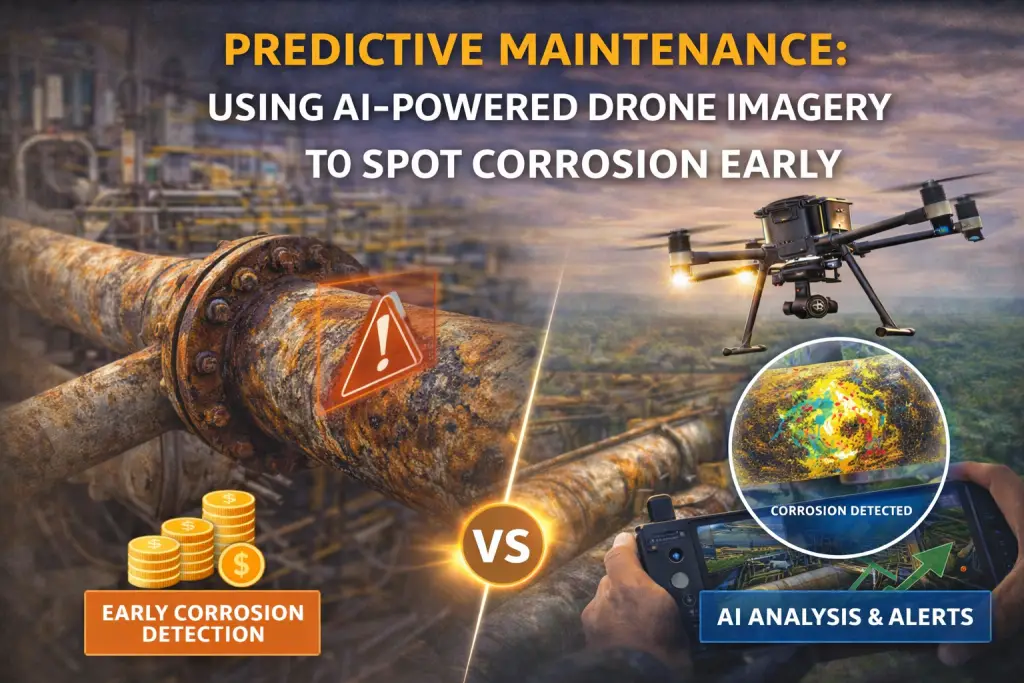
AI-powered drone inspection for predictive maintenance is one of the most expensive and dangerous challenges in industries such as oil & gas, marine, power generation, and heavy infrastructure. Left undetected, it weakens structural integrity, increases downtime, and can lead to catastrophic failures. Today, AI-powered drone imagery is transforming corrosion detection from reactive inspection to predictive maintenance.
The Role of AI-Powered Drone Inspection in Corrosion Inspection
Traditional inspection methods require scaffolding, rope access, or shutdowns. Drones eliminate many of these risks by capturing high-resolution imagery of:
- Elevated pipelines
- Offshore platforms
- Storage tanks
- Transmission towers
- Flare stacks and structural beams
Equipped with RGB, thermal, and multispectral cameras, drones can capture fine surface details invisible to the naked eye.
How AI Detects Early-Stage Corrosion
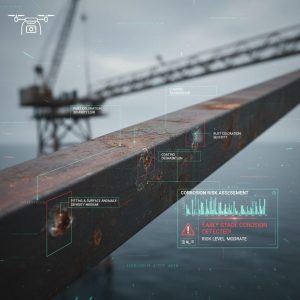
Artificial Intelligence models are trained on thousands of corrosion samples to recognize:
- Rust coloration patterns
- Pitting and surface texture anomalies
- Coating degradation
- Thermal irregularities indicating material thinning
Using computer vision algorithms, the system automatically flags suspicious areas and assigns severity levels. Instead of manual review of hundreds of images, AI reduces inspection time drastically while improving detection accuracy.
Integration with Enterprise Systems
AI-processed drone data can integrate directly into enterprise systems such as SAP ERP and cloud environments like Microsoft Azure. Once corrosion is detected:
- A maintenance ticket is automatically generated
- Asset health scores are updated
- Risk levels are logged
- Work orders are triggered
This shifts maintenance strategy from time-based schedules to condition-based interventions.
From Reactive to Predictive Maintenance
In traditional systems: Inspection → Damage Found → Repair
With AI-powered drone monitoring: Continuous Imaging → AI Trend Analysis → Early Warning → Planned Intervention
Machine learning models track corrosion progression over time. If surface degradation accelerates, the system predicts failure probability and recommends optimal maintenance windows—reducing emergency shutdowns.
Key Benefits
- Reduced downtime and shutdown costs
- Improved worker safety (fewer high-risk manual inspections)
- Early detection before structural compromise
- Data-driven asset lifecycle planning
- Lower long-term maintenance expenditure
Challenges to Address
- Large datasets require storage and processing power
- Environmental factors affecting image quality
- Need for high-quality training data
- Cybersecurity of inspection data
However, with proper data governance and model training, these challenges are manageable.
Conclusion
AI-powered drone imagery is redefining predictive maintenance. By spotting corrosion at its earliest stages, organizations can move from reactive repairs to intelligent prevention strategies. The result is safer infrastructure, longer asset life, and significant cost savings.
In industries where corrosion silently erodes profitability and safety, early detection is not just an advantage—it is a strategic necessity.